
A personal take on how Nintendo can warp star Mario to the next level
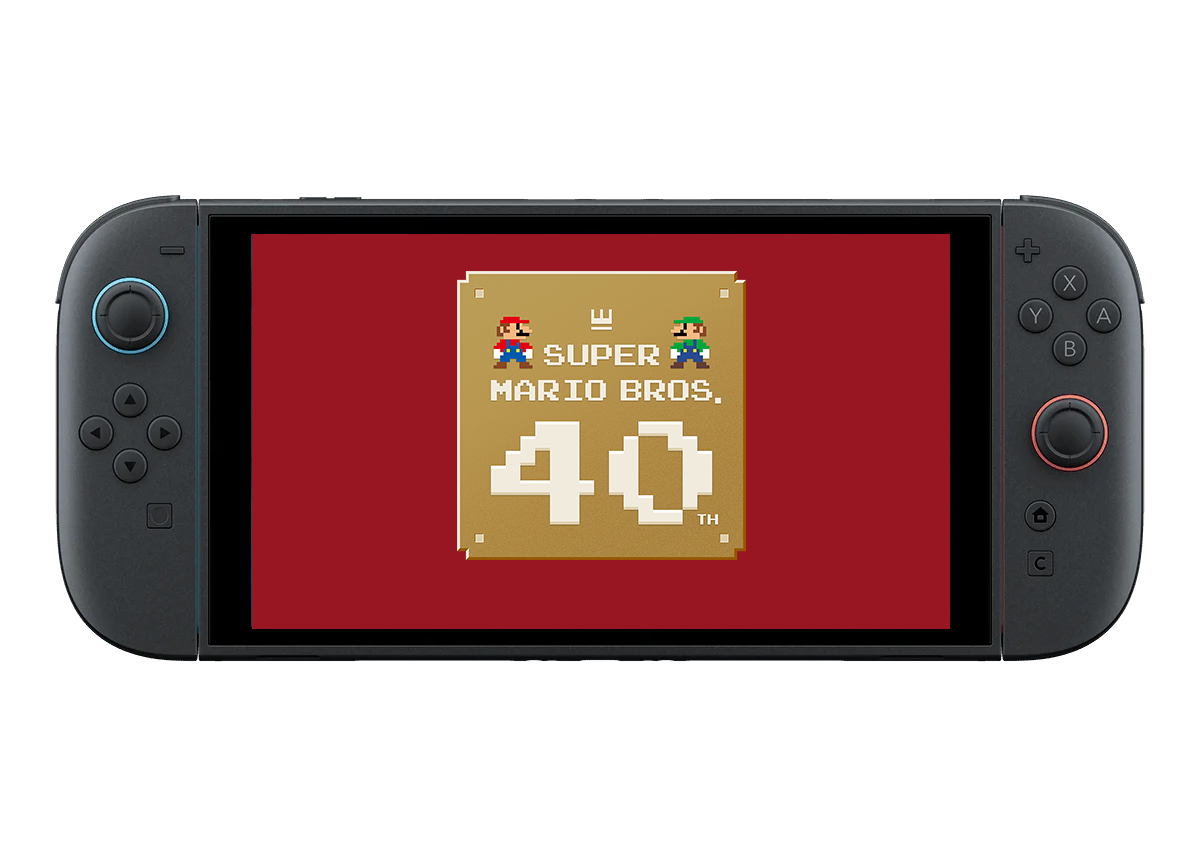
As we approach Mario’s 40th anniversary, I keep coming back to the same thought:
Nintendo has already explored almost every traditional idea you can do with Mario. And that’s not a bad thing — it’s a testament to how enduring and well-designed the franchise is. But it also means that if Mario is going to move forward in a meaningful way, the next step can’t just be another mechanical gimmick or a safe remix of what’s come before.
It has to be deeper, more immersive, and more collaborative — especially now that so many of us who grew up with Mario are introducing the franchise to our kids.
I played Super Mario Odyssey with my daughter and genuinely loved it. It was joyful, imaginative, and playful. But playing it together also highlighted what I think is missing — and what a true 40th-anniversary Mario game could become.
Immersion Over More Gimmicks
Odyssey’s worlds were fun, but they often felt like playgrounds rather than places. For a milestone Mario game, I’d love to see Nintendo lean into more immersive world design — environments that feel lived in, cohesive, and layered, while still maintaining that colorful, imaginative Mario identity.
This is where collaboration matters.
Bringing in developers from MonolithSoft early on could help shape large, interconnected regions inspired by the exploration philosophy of Xenoblade Chronicles X: clear landmarks, strong verticality, distant points of interest you can see long before you can reach them, and environments that reward curiosity instead of constant checklist collecting.Mario doesn’t need to become Zelda — but he can borrow a stronger sense of a large, connected world of wonder.
Imagine traversing seamlessly from the Mushroom Kingdom to the Cascade Kingdom (Super Mario Odyssey), traveling on foot or on Yoshi across regions, and along the way noticing interesting, suspect-looking areas that clearly hold secrets you can’t reach yet — but instinctively know there must be a way to reach it. All of this instead of hopping between isolated spaces separated by load screens.
Co-Op Should Be the Core, Not an Afterthought
One thing that always felt off to me in Odyssey was that Luigi wasn’t a true second playable character. For a franchise that so many families experience together, co-op should feel equal, not like a limited helper mode with Cappy, a chaotic add-on like Super Mario 3D World, or a more basic side-scrolling approach like Super Mario Wonder.
In my ideal Mario game:
- Mario, Luigi, and Yoshi are all main characters
- Each has a distinct role and movement identity
- Solo players can swap freely between them
- Co-op players each take full control of a character
Beyond simple co-existence, Mario and Luigi should have true dual-tech abilities — cooperative moves that only emerge when they work together. Timed jumps, momentum-based launches, synchronized attacks, or traversal techniques that reward coordination rather than button mashing.
These wouldn’t be mandatory for progression, but they would create moments of discovery and excitement! — the kind of “we figured that out together” experiences that make co-op play memorable.
Luigi’s Mansion is a great reference point here as well. Those games excel at two-player readability, expressive animations, and environments that feel interactive and atmospheric. Bringing some of that design philosophy into a Mario adventure would make co-op feel intentional — not thrown in as an afterthought.
Yoshi as the Key to Exploration
Yoshi shouldn’t just be a mount — he should be an exploration engine.
I’d love to see region-specific Yoshi transformations tied to unique berries found throughout the world. Each region could introduce a new transformation that changes how Yoshi interacts with the environment :
- Some focused on traversal
- Some on combat
- Some on defense or puzzle-solving
These would act as discovery-based upgrades that expand how you approach the world, rather than simply locking progress behind abilities.
Classic Mario Suits, Reimagined as a Skill System
One of the most exciting possibilities for a 40th-anniversary game is rethinking Mario’s classic transformations — the Frog Suit, Tanooki Suit, Cat Suit, and a few new ones — not as isolated power-ups, but as part of a flow-based mastery system.
A system that rewards skill and creativity without punishing younger players.
The idea is simple:
- You equip a small inventory of suits you acquire along your adventure
- As you play well, you build a meter
- When that meter is active, you can temporarily switch suits on the fly
This opens up expressive, high-skill movement while remaining completely optional.
For example:
Jump as Frog Mario for a vertical boost → switch mid-air to Tanooki Mario to glide → tail whip an enemy → land on a platform that would otherwise be unreachable.
Some areas might normally require a specific Yoshi transformation — but skilled players who master suit switching could reach them another way. That kind of design rewards creativity without ever blocking younger players from progressing.
Interestingly, Donkey Kong Bananza already experimented with animal transformations, and that game was developed by the same team behind Odyssey. To me, that makes this feel like a natural evolution rather than a risky leap — especially if Mario is the franchise that introduces the idea to a much wider audience.
A Story That Grows With the Audience
I don’t want Mario to become dark or edgy. But I do want a stronger story — one that feels a bit more Pixar than Saturday-morning cartoon.
That means:
- Emotional beats that land for parents
- Simple, readable themes for kids
- Humor and charm that land with joy and craft
Bowser doesn’t need to be the main villain again. He can still exist — but the story could explore bigger ideas like legacy, change, and what it means to protect joy in a world that’s evolving.
One possible direction could involve a villain who is more cunning and imposing than Bowser — one even Bowser doesn’t fully understand or want to confront. Not as a darker turn, but as a way to raise the stakes and give the story weight without losing Mario’s heart. A villain tired of Bowser’s constant failures and uninterested in princesses, focused instead on reshaping the world itself.
Mario Galaxy proved Nintendo can do this subtly and beautifully. There’s no reason Mario can’t go there again.
Expression Over Prescribed Solutions
What excites me most about these ideas isn’t just the mechanics themselves — it’s what they unlock. Mario and Luigi are brothers, and a 40th anniversary game feels like the perfect moment to let that relationship shine through meaningful, expressive team-up play.
By combining dual-tech abilities, suit-flow mastery, and Yoshi’s transformative exploration, Mario would shift away from tightly prescribed solutions and toward emergent gameplay — the kind of design where players discover their own ways to solve problems.
We’ve already seen how powerful this approach can be in Tears of the Kingdom. Players didn’t just beat that game — they expressed themselves through it. They found unconventional ways to traverse the world, defeat bosses, and solve challenges using creativity rather than a single “correct” solution.
A 40th anniversary Mario game could bring that same sense of discovery to the Mario universe — not through complex systems or building mechanics, but through joyful, intuitive tools that feel natural to Mario’s world.
Different players would approach the same challenge in different ways. Kids might find the simplest path forward. Experienced players might chain together suit changes, dual-tech moves, or Yoshi abilities to reach hidden areas or take down enemies in surprising ways. Families playing together would stumble into solutions neither player would have found alone.
That kind of design doesn’t just add replayability — it creates stories players share with each other long after the game is finished.
Expression Over Prescribed Solutions
At 40 years old, Mario isn’t just a mascot — he’s a bridge between generations.
If parents who grew up with the NES Mario and went on to enjoy the SNES, N64, and GameCube generations don’t feel excited by where Mario is going, they won’t introduce it to their kids. And if kids don’t form that early connection, Nintendo loses something far more valuable than sales numbers: generational continuity.
A true 40th-anniversary Mario game should feel like:
- A celebration of everything Mario has been
- A confident step toward what he can become
- A shared experience for parents and kids alike
Nintendo has all the talent and history needed to make this happen. What they need now is the willingness to let Mario grow — not away from his roots, but by adding to them.
And honestly, after forty years, he’s earned that next step — and so have the fans who grew up alongside him.
“The true design evolution of a 40th anniversary Mario game lies in immersive worlds to explore and expressive, collaborative play that reignite the love of Mario for the next generation.”
Author’s Note
“I grew up with Mario and now play games with my daughter. This article reflects how I think about game design, co-op play, and generational storytelling.”